
A Technical Overview of Design, Safety, and Corrosion Considerations of Severn’s Butterfly Valves In Fire Water Systems
Butterfly valves in Fire water systems are critical safety infrastructures on offshore oil rigs, onshore coastal facilities and floating production, storage, and offloading (FPSO) vessels. Unlike inland-based systems that rely on municipal water supplies, offshore, vessels & coastal facility fire systems draw seawater directly from the surrounding environment. This requires specialised equipment and robust corrosion control strategies to ensure long-term reliability (and minimise potential critical safety risks). These safety systems are designed with multiple layers of defence to address a range of fire scenarios—from minor hydrocarbon spills to large-scale fires that can potentially threaten life and cause large scale environmental impact. The integrity of each component is vital to the system’s performance during emergencies.
Key Components of Firewater Systems
- Firewater Pumps: The heart of the system, these pumps draw in large volumes of seawater and pressurise it into the firewater ring main. Offshore facilities typically use two or more pumps for redundancy, powered by independent diesel engines or hydraulic units to ensure operation during power loss.
- Jockey Pump: A smaller pump that maintains system pressure during standby conditions, preventing unnecessary cycling of the main pumps.
- Pump Configurations: Options include submerged caisson-type pumps and dry-mounted diesel-hydraulic pumps, depending on platform design and operational requirements.
- Firewater Ring Main: A looped network of large-diameter piping that distributes pressurised seawater across the facility. Constructed from corrosion-resistant materials such as copper-nickel (Cu-Ni), glass-reinforced plastic (GRP), or titanium, the ring main ensures water delivery even if part of the system is compromised.
- Deluge Systems: Automatically activated by fire and gas (F&G) detection systems, these systems release water or foam through open nozzles to suppress fires in high-risk zones.
- Foam Systems: Used for flammable liquid fires, foam is mixed with water in a proportioning device and delivered via deluge systems or foam monitors. Fluorine-free foams (FFF) are increasingly adopted for environmental compliance.
- Monitors and Hydrants: High-capacity water cannons and strategically placed hydrants enable manual firefighting and localised response.
Emergency Operation of Firewater Systems
In the event of a fire, the firewater system is automatically activated through a sequence of coordinated actions:
- Fire Detection: Sensors within the integrated Fire and Gas (F&G) detection system identify heat, smoke, or flame signatures.
- Alarm and Response: Upon detection, the system triggers an alarm and initiates the firewater pumps, drawing seawater and pressurising the ring main.
- Deluge Activation: Deluge valves open rapidly, often before the pumps reach full pressure. The system is designed to accommodate this pressure surge to prevent pipework damage.
- Fire Suppression: Water, or a water-foam mixture, is discharged through nozzles or monitors to suppress the fire, cool surrounding equipment, and prevent escalation.
- Emergency Shutdown (ESD): In severe incidents, the Emergency Shutdown system isolates hydrocarbon sources and halts processing operations to contain the hazard.
The Importance of Fire-Safe Certified Isolation Valves
While pumps and piping are vital, the reliability of Isolation valves is equally critical. These valves must maintain integrity under extreme heat to ensure uninterrupted water delivery during a fire.
The reality is that some fire water systems were (are) built and specified with either rubber lined valves or non-fire safe certified valves meaning that either costs have been prioritised over safety, or criticalness of the application hasn’t been appreciated, and although the chances of an incident are small, the consequences could be fatal. Rubber lined valves are often specified as they can significantly reduce costs, cheaper body materials such as cast iron and carbon steel can be used as the rubber prevents the seawater contacting this, these valves will function correctly until an emergency occurs and the rubber melts or burns away. The valves are then rendered useless and will not perform the function they are needed to perform during this crucial time. This can lead to loss of system pressure, or leaks, meaning the relevant sections of pipe cannot be isolated, the water pressure isn’t high enough or the water cannot be directed to where is needed to extinguish the fire. This is not just for rubber lined valves, but it is also the same for other non-firesafe designed and certified Butterfly valves.
Operators must ensure that the highest levels of safety are maintained and critical to this, it means ensuring the correct valves are specified for safety critical applications. These choices can stem from cost-saving measures or a lack of understanding of the application’s criticality. However, the consequences of valve failure during a fire can be catastrophic.
Fire Risks and Valve Failure Modes
Standard Isolation valves often use polymer-based components (e.g., PTFE seats and seals) that degrade at fire temperatures (750°C–1000°C). This can lead to:
- External Leakage: Loss of sealing allows pressurised water to escape, reducing firefighting effectiveness.
- Internal Leakage: Through-seat leakage compromises isolation, potentially flooding unintended areas.
Loss of Operability: Heat distortion can jam the valve, preventing manual or remote operation.
Fire-Safe Certification Standards
To mitigate these risks, valves must be tested and certified to recognise fire-safe standards:
- API 607: For quarter-turn valves with non-metallic seats.
- API 6FA: Covers metal-seated valves under fire conditions.
- ISO 10497: International fire type-testing standard.
Typical Fire Test Procedure:
- Preparation: Valve is pressurised to 75% of its rated pressure and closed.
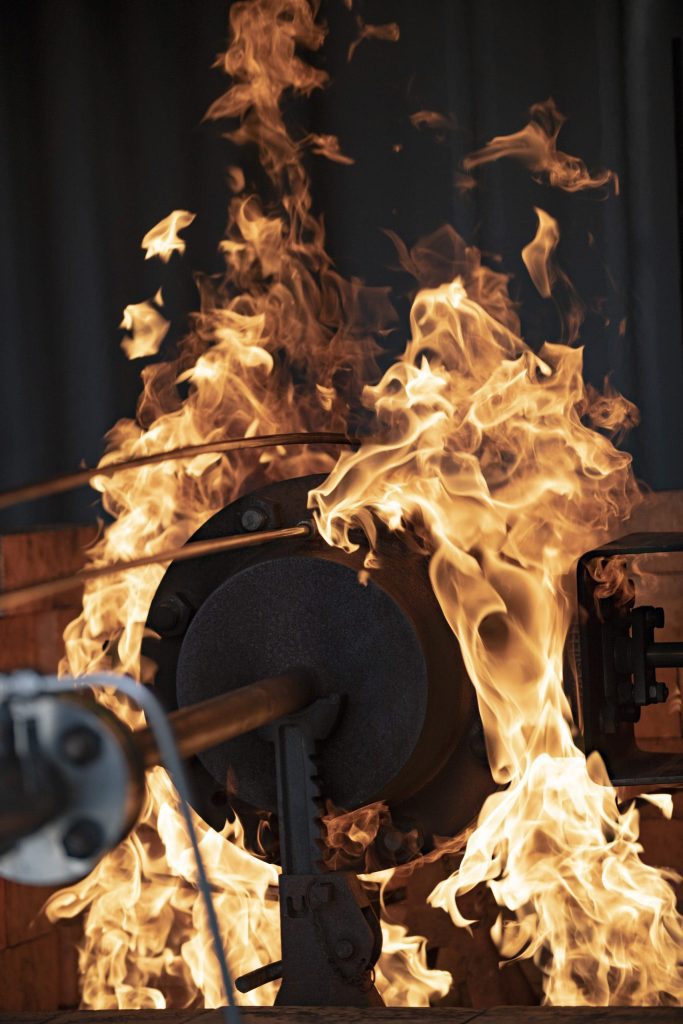
- Fire Exposure: Valve is engulfed in flames for 30+ minutes at 750–1000°C.
- Cooling and Inspection: Leakage is measured post-burn.
- Operability Test: Valve must be cycled open and closed to confirm functionality.
Severn’s Butterfly Valves in Fire water – Safe Valve Design Options
Several valve designs are available at Severn Butterfly Valves in fire water systems, each with distinct advantages and limitations:
Severn Double Offset Valves
Firesafe certified Double offset valves, these are generally designed with a primary polymer seal and metallic backup metal seal, this means that in the event of a fire the PTFE seal can burn away or melt, and the metal seal will then come into contact sealing face; the risks are that if the polymer doesn’t fully carbonise or flow away from the secondary metal seal it risks becoming jammed between the two sealing faces and can stop the valve from closing fully, causing an internal leak. These valves have graphite packings and gaskets to prevent external leakage in the event of a fire.
Severn Triple Offset Valves
This torque seated valve is the preferred option and provides metal to metal torque seating. This design uses metallic and graphite to provide leak tight sealing in the event of a fire. The negatives of this are that, when used in seawater applications, galvanic corrosion can occur causing premature failure of the valves, further details of what galvanic corrosion is and the issues are explained later in this article. There is however another option:
Severn’s OCT-SW Valve: A Graphite-Isolated Solution
Developed by Severn Glocon, Oblique Cone Technology is a patented triple offset valve design, enhanced further with graphite isolated parts for Sea Water service the OCT-SW valve addresses both fire safety and corrosion resistance:
By using the same principals as a standard Triple Offset valve, but enhancing this further with patented design technology and understanding the headaches galvanic corrosion can cause for operators. With the OCT-SW, all graphite components are isolated from contacting the line media during normal operation, eliminating the risk of galvanic corrosion. But as they remain within the valve design, they provide reliable sealing in the event of a fire.
The OCT-SW design uses a primary metal seal, and polymer back-up seal. By using the metal as a primary seal and torque seating the disc closed, it means that the metal seal does 99% of the valve sealing, meaning that the Polymer seal is only there to provide the last 1% and ensure full zero leakage isolation. What this means is that in the event of a fire, if the polymer, deforms, melts or carburises, the metal-to-metal seal still remains and provides a tight dependable seal.
Adopting a metal-to-metal torque seated design, means that even when exposed to the extreme heat of a fire the polymer seal cannot flow between the two metal sealing surfaces, therefore eliminating the risks that can be seen with Double Offset valves.
For Severn, safety is paramount which is why this valve includes enhanced safety which include dual anti blowout protection and fugitive emission certified packing as standard. Severn’s OCT-SW design combines the best aspects of Double and Triple Offset valves while eliminating their respective weaknesses.
Industry implications and conclusion
For industries with high fire risks, specifying fire-safe certified Isolation valves for firewater systems should be a non-negotiable best practice.
- Safety and reliability: These valves ensure the firewater system remains operational and can perform its critical function of extinguishing or controlling a fire.
- Regulatory compliance: Many regulatory bodies and industry standards, particularly in the oil and gas sector, mandate the use of certified valves for fire-prone areas.
- Asset protection and business continuity: Protecting the firewater system’s integrity directly protects personnel, high-value assets, and ensures business continuity.
By investing in certified, fire-safe Isolation valves, facility operators can be confident that their firewater system are a resilient and reliable defence against the worst-case fire scenario.
Discover how engineering excellence, and offshore flow control innovation have driven Severn’s OCT TOV Butterfly Valve to deliver unmatched reliability in seawater service valve applications and harsh offshore environments.
Severn’s research & development team has designed a Butterfly Valve for Seawater Applications that solves the problem of galvanic corrosion in offshore systems and meets strict firesafe valve standards. Utilising over 65 years of engineering excellence in industrial valve design, the team of technical valve specialists achieved this by using Severn’s patented Oblique Cone Technology (OCT). The OCT‑SW Butterfly Valve takes this proven control and isolation valve technology to the next level by eliminating the need for graphite in the seal while maintaining full firesafe performance required for critical offshore safety systems.
What is galvanic corrosion and its costly effects?
The impact of galvanic corrosion in seawater valve systems on critical offshore assets due to marine process conditions is an enduring problem for offshore oil & gas installations, FPSOs, and sealine infrastructure. At best, it increases maintenance workload and repair activity during planned shutdowns. At worst, it can result in rapid or unexpected valve failure, leading to unplanned production downtime or emergency shutdowns.
Either way, galvanic corrosion presents a significant lifecycle cost risk that negatively impacts plant efficiency, operational reliability, and total cost of ownership. However, Severn has utilised its engineering heritage, in‑house R&D capability, and valve repair intelligence to develop a seawater butterfly valve solution that tackles galvanic corrosion head‑on.
Why does galvanic corrosion occur?
The cause of galvanic corrosion (also referred to as dissimilar metal corrosion or bimetallic corrosion) is an electrochemical reaction between two different conductive materials in close proximity within an electrolyte, such as seawater processing systems. One material – typically the least noble – is preferentially corroded.
In offshore valve design, the classic rule of “do not mix metals” is difficult to achieve due to extreme environmental conditions, fire safety requirements, and stringent materials specifications.
Modern offshore safety systems, such as firewater systems, must withstand continuous exposure to corrosive seawater, while delivering reliable isolation and control valve performance during normal operation and emergency conditions. Seawater service valves therefore play a critical safety role, making the elimination of galvanic corrosion while maintaining firesafe valve certification a long‑standing industry challenge.
The graphite challenge in seawater valve applications
In recent years, graphite sealing technology has become widespread in industrial valve manufacture due to its excellent thermal resistance, chemical stability, and flexibility. However, graphite is also the only non‑metallic electrical conductor and is more noble than many metals commonly used in offshore valve construction, including stainless steel, bronze, and titanium.
As a result, when graphite is exposed to seawater in contact with these metals, it can accelerate galvanic corrosion, particularly within seawater butterfly valves, control valves, and firewater isolation valves.
Traditionally, Severn’s Triple Offset Butterfly Valves utilised graphite in parts of their construction, which in seawater service applications could contribute to galvanic corrosion. Over time, this may compromise sealing integrity, valve reliability, and plant safety, potentially leading to costly unplanned outages.
Engineering a long‑term seawater valve solution
By working closely with offshore operators, EPC contractors, and end users, Severn identified this challenge and applied its extensive engineering heritage and technical valve design expertise to develop a long‑term solution.
The Severn engineering team designed a valve that either eliminates graphite entirely or isolates it completely from the line media, significantly reducing the risk of galvanic corrosion during normal operation. This ensures the highest levels of operational safety, asset protection, and system reliability, supporting the industry’s requirement for safe operations and minimal downtime.
OCT‑SW Triple Offset Butterfly Valve for Seawater & Firewater Systems
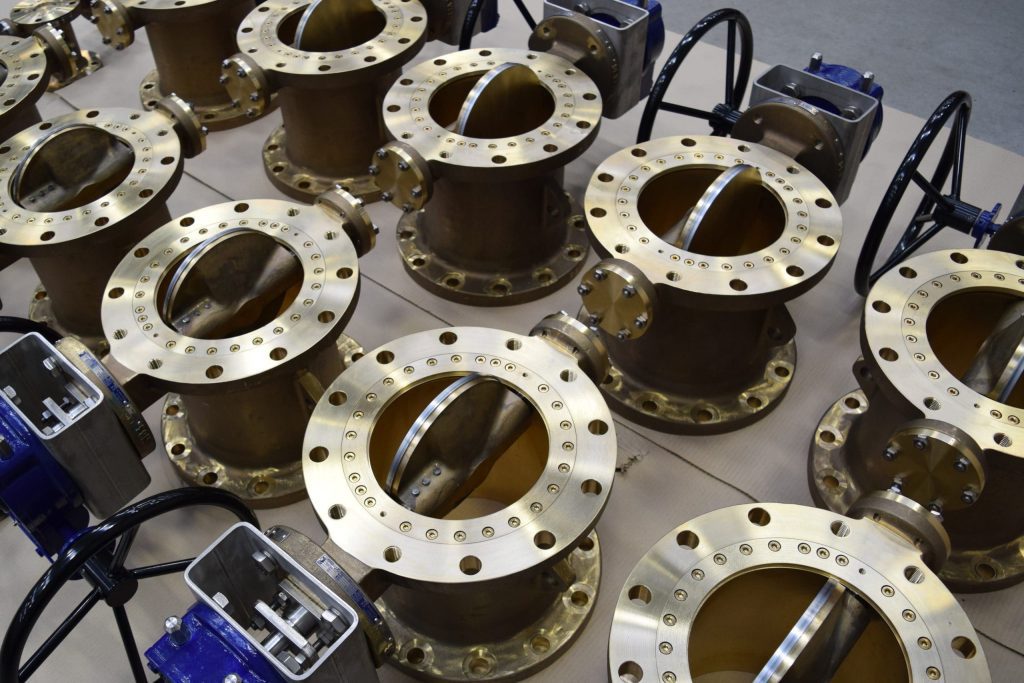
Severn’s OCT‑SW Triple Offset Butterfly Valve is a high‑performance seawater valve solution developed specifically for offshore sealine applications, firewater systems, and marine utility services.
These valves play a pivotal role in offshore safety systems, particularly where rapid isolation, reliable shut‑off, and firesafe operation are mandatory. Leveraging over 65 years of oil & gas valve engineering experience, the OCT‑SW valve has been designed to help operators meet their core objectives of safety, reliability, and reduced downtime.
Hybrid metallic‑polymer sealing technology
Severn has developed a hybrid polymer‑metallic sealing arrangement that removes the need for graphite laminates. By combining a primary metallic seal with a secondary polymer seal, Severn has:
- Eliminated graphite exposure to seawater
Increased isolation valve sealing performance
Maintained full firesafe valve certification
Furthermore, by ensuring that any remaining graphite gaskets and packings are fully isolated from the process media, the design prevents graphite and seawater from ever coming into contact. This eliminates galvanic corrosion risk, protecting production uptime, asset integrity, and operating efficiency.
Certified firesafe and ATEX‑compliant valve design
In addition to mitigating corrosion, Severn’s Butterfly Valves for Seawater Applications meet key firesafe testing standards, including:
- API 6FA
- API 607
- ISO 10497
This confirms the OCT‑SW valve as a certified fire‑safe valve, suitable for critical emergency scenarios.
The design also complies with ISO/IEC 80079‑36:2018 (ATEX) requirements, ensuring that static charge build‑up is eliminated and preventing any risk of spark generation. This makes the valve suitable for a broader range of hazardous area applications, extending beyond seawater service and reinforcing its versatility.
Materials, retrofitting & offshore suitability
The Severn OCT‑SW Butterfly Valve can be manufactured in a range of corrosion‑resistant materials, including:
- Aluminium Bronze
- Super Duplex Stainless Steel
- Titanium
Anti‑blowout protection is provided as standard. Available in standard and non‑standard face‑to‑face dimensions, with lugged and double‑flanged body styles, the valve can be easily retrofitted into existing offshore pipeline systems. This makes it an ideal upgrade solution for operators experiencing galvanic corrosion issues in seawater valve systems.
Fireproof Assurance: Severn’s OCT TOV Butterfly Valves Exceptional Fire Safety Design and Testing Credentials
As part of a safety‑first valve design approach, Severn incorporates into its innovative Oblique Cone Technology (OCT) Triple Offset (TOV) Butterfly Valve, fire safety is a critical part of that safety first objective. Fire testing standards state the minimum requirements the valve must achieve in order to receive fire safe certification. The standards dictate the setup & parameters required to simulate the conditions a valve may be subjected to during a hydrocarbon fire scenario, and test to ensure the valve can operate satisfactorily afterwards.

To summarise, the test consists of a valve being mounted in a fire testing rig to flow water through the valve, and measure leakage both internally past the seal as well as externally through the packings and gaskets. The valves are then pressure tested at ambient temperature, once the valve has passed this element of the test, any leakage is recorded. The valve is then subject to a simulated fire by use of gas burners, with average temperatures of between 750°C & 1000°C recorded by thermocouples for the 30‑minute fire test duration. Once complete, the flames are extinguished, and the valve is subjected to a forced cooldown using water to simulate the fire being extinguished on site.
The leakage during fire is measured and recorded. The valve is then subject to a re‑ambient temperature and post‑fire operational test, with the maximum leakage requirements being defined within the relevant API and ISO fire safety standards. The tests are carried out in both the preferred and reverse directions and are witnessed by a 3rd party approval body, giving added confidence that the fire tested butterfly valve will perform as required in either flow direction.
By investing in and developing their own on‑site fire test facility, Severn can understand and interpret the results to re‑design & develop the fire safe valve technology for the OCT TOV Butterfly Valve, to further exceed the requirements set out in the standard. By doing this, Severn have been able to achieve up to zero seat leakage, even after API 607, API 6FA and ISO 10497 fire testing, giving further confidence in safety‑critical valve applications and ensuring a safety‑first solution for the end user and their operations.
The key to Severn’s success lies in their patented Oblique Cone Technology (OCT), which received approval from the UK Intellectual Property Office in 2018. This innovative triple offset valve design uses an ‘infinite circle’ geometry that allowed the research and development team to develop the circular sealing geometry, providing the flexibility to use the valve for both control and isolation duties, with the option of interchangeable seals and control trims.
Utilising its over 60 years of valve engineering expertise, Severn have designed and developed the innovative OCT TOV Triple Offset Butterfly Valve, a valve that meets the requirements of API 6FA, API 607, and ISO 10497 fire testing standards. These bi‑directional isolation and control valves offer repeatable zero leakage performance, providing peace of mind for operators while ensuring safe operations and reduced downtime.


Severn’s fire test certification covers the OCT Laminate, Hybrid (OCT‑HS) and Seawater (OCT‑SW) seals, achieving the required leakage rates in accordance with relevant international fire safety standards. By designing, developing, and testing the hybrid polymer metallic fire safe seal, Severn have been able to deliver a graphite‑free firesafe sealing solution that continues to perform even after exposure to extreme fire conditions. The OCT‑SW seal technology, designed for seawater service, prevents graphite contact with line media, eliminating galvanic corrosion risks and extending valve service life.

By meeting stringent fire testing and certification requirements, Severn provide customers with a reliable and proven fire safe butterfly valve solution. With its patented oblique cone technology, Severn has set a new benchmark in triple offset valve design, helping end users achieve their core objective of safe operations, asset protection, and reduced downtime.
Severn’s engineering heritage and excellence in valve manufacturing has led to the innovative design of a product that can master both Control & Isolation applications within critical flow control systems.
Utilising Severn’s long history with Control Valve design, our team of valve engineering experts have been able to manufacture a Triple Offset Butterfly Valve that can be used to provide superior flow control performance in both throttling and modulating service, whilst additionally providing a repeatable, bubble‑tight seal for isolation valve duties.
By designing a Control Valve that can isolate, rather than an isolation valve that attempts to control (which may initially sound similar but is fundamentally different in performance outcome), Severn has developed a high‑performance butterfly valve that maximises Cv through streamlined internal geometry. This delivers optimal flow characteristics, improved process controllability, and stable valve performance under variable operating conditions.
This distinction is critical for industries requiring precise process control, reliable shut‑off, and long‑term operational safety, particularly within oil & gas, energy, offshore, chemical processing, and industrial fluid handling systems.
Designing for Reliability, Safety, and Performance
Severn has eliminated the need for disc fasteners or bolted‑on seals, allowing further optimisation of the disc profile. By removing fasteners from the disc:
- Flow efficiency is improved
- Pressure drop is reduced
Risk of loose components entering the pipeline due to vibration is eliminated
This approach significantly enhances operational reliability, particularly in high‑vibration and severe service environments.
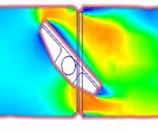
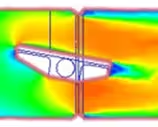
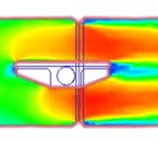
By adopting a body‑mounted sealing arrangement, Severn has increased both the longevity and reliability of the valve. Removing the seal from the direct flow path of the process media reduces wear, enabling Severn to:
- Increase effective bore size
- Maximise Cv
- Extend service life in demanding applications
Patented Oblique Cone Technology (OCT)
Using Severn’s Patented Oblique Cone Technology (OCT), the valve utilises circular sealing geometry that ensures an even seal load distribution around the circumference of the disc.
This technology provides:
- Repeatable bubble‑tight shut‑off
- Improved operational safety
- Enhanced process reliability
- Reduced downtime and maintenance intervention
Ensuring customers consistently meet their core remit of safe operations and minimum downtime.
Advanced Trims for Severe Service Conditions
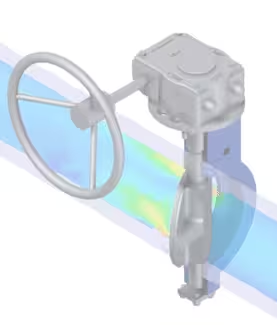
The OCT geometry enables Severn to offer an extensive range of control valve trims not traditionally associated with Triple Offset Butterfly Valves.
- By utilising a one‑piece disc design, Severn can incorporate:
- Anti‑cavitation trims
- Noise‑reduction solutions
- Flow conditioning elements
- Baffle plates for severe service control
This allows the valve to operate effectively in high‑pressure drop, high‑velocity, and erosive flow conditions, where a conventional butterfly valve would typically suffer reduced service life or performance limitations.
Reduced Inventory, Lower Costs, Greater Efficiency
- The OCT Triple Offset Butterfly Valve can be utilised for both control and isolation valve applications, enabling end users to:
- Reduce valve stock inventory
- Standardise spare parts
- Lower overall operating costs
- Simplify maintenance strategies
Standardised and interchangeable components further reduce spares holding requirements, delivering measurable lifecycle cost savings.
It also provides end users with the option to utilise a single valve to perform both control and isolation functions within a system, rather than two separate valves. This results in:
- Reduced CAPEX and OPEX
- Lower system weight
- Simplified piping design
These benefits are particularly critical for weight‑sensitive applications such as offshore installations, FPSOs, and platform‑based processing facilities.
Discover how Severn’s high‑performance control and isolation valve solutions can enhance your operation.